
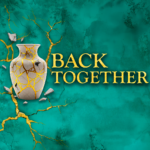

Today we are launching a brand-new, four-week sermon series entitled “Back Together: Broken People of the Bible.”
Over the next month, we are going to look at four remarkable individuals in Scripture whose lives were deeply broken—emotionally, physically, socially, or spiritually:
• Week 1: Hannah – Restored to Fruitfulness
• Week 2: Mephibosheth – Restored to a Place at the Table
• Week 3: Matthew – Restored to Apostleship
• Week 4: Ruth – Restored to Family
Our guiding visual throughout this series is the ancient Japanese art of Kintsugi.
Kintsugi literally means “to join with gold.”
It is the practice of taking a piece of pottery that has shattered—a bowl, a vase, a plate—and instead of throwing it into the trash, the master craftsman carefully pieces it back together using a lacquer mixed with gold dust.
Take a look at how this master craftsman brings beauty out of brokenness…
Kintsugi video:
https://www.dropbox.com/scl/fo/wjt5vvad0ljeevrcmsqg5/AOAiI9V6dT-ITpp5WThqCiE?e=1&preview=Kintsugi+3_50.mp4&rlkey=8kv28j4mfkkr6dl6ou93gnrie&st=zr84oueq&bmus=1&dl=0
Notice what happens through this process: the master craftsman does not hide the cracks. He highlights them with gold.
The restored piece isn’t just repaired; it is rendered more exquisite, more unique, and far more valuable than it was before the break.
In our culture, when something breaks, we throw it away and move on.
Have you ever felt like life broke you so badly that you were beyond repair?
When you look at the cracked or painful places in your story today, do you see useless debris, or do you see a masterpiece waiting to be remade?
In the hands of the Master Potter—our Creator and Redeemer—brokenness is never a permanent condition for a child of God.
God is and always has been a restoring God.
He does not throw us away when life shatters us. He draws near, and wherever you are broken, the Master Potter is ready to repair.
By His grace, He joins our broken pieces together with the golden thread of His redemption.
When I think about Kintsugi, I am reminded of my mother.
Mom loved making crafts. She could take seashells, driftwood, weeds from the side of the road, or ordinary rocks, and through her creativity, she had the uncanny ability to transform them into something truly beautiful.
For years, her handmade creations were sold in the gift shops all along Skyline Drive.
But during the last six years of her life, Mom lost her sight. She could no longer see to create the crafts she had loved for decades.
Outwardly, her body faced compounding health problems, and her earthly vessel was wearing thin.
Yet, in Mom, I saw Kintsugi lived out with radiant clarity. Even as her body was failing, her spirit grew stunningly beautiful.
Through her daily struggles, she grew into an ever-deepening relationship with God, witnessing for Jesus to literally everyone she encountered—nurses, doctors, visitors, and family.
Over the 13 years I served as her caregiver, I witnessed miracle after miracle of God’s gold filling her broken places. I remember them all, but three stand out.
The first was on the eve of Thanksgiving. Mom refused to go to the hospital because she didn’t want to die there.
I spent the entire night sitting upright beside her bed, giving her nebulizer treatments. Exhausted, I fell asleep in that chair.
When I woke up, it was Thanksgiving morning—and she was still alive. What a pure joy to have my mom for one more day.
The second came when doctors insisted she enter palliative care after a 30-day hospital stay. Mom chose to trust God and return home under my care instead.
She was discharged on Christmas Eve, and that night, we took her to the Christmas Eve service at the Harrisonburg Campus.
Though she was blind and couldn’t see the faces around her, her heart overflowed just being surrounded by friends, hearing their voices, and receiving their hugs.
And God didn’t just give us that Christmas— He blessed us with nearly a year and a half of precious time together.
Then came May 5th. We had prayed together that morning and were resting in total peace when she looked at me and said, …
“I love you, Peaches and Cream.”
Within thirty minutes, she was in an ambulance with a ruptured aneurysm.
After a long day of excruciating pain and countless tests, the doctors finally came in with the news: she needed a high-risk emergency surgery—and she might not survive it.
We wept and prayed together again, placing our trust in God.
We both knew that if we didn’t see each other again on this earth, we would be reunited in heaven.
And with that peace, they rolled her away for a six-hour surgery.
Mom passed away the next day at 89 years old.
While it sounds like a sorrowful ending, it was a moment of profound grace.
God answered our prayers: I was spared the agony of deciding to remove her from life support, because the Lord gently carried her home—healed, whole, and no longer suffering.
In Mom, I saw a living picture of what God does when our physical bodies break—how even as her earthly vessel wore down, the golden treasure inside her shone brightly.
But when I look at Kintsugi, I don’t just see my mother. I see my own life.
I know what it feels like to be a shattered jar of clay from the inside out, and what God does when our spiritual lives are broken.
I am not just talking about May 23, 1991—the moment God saved me and delivered me from drugs and alcohol. I’m talking about the ongoing work of His grace in my life ever since.
Even now, at 64 years old, He is still working on me! His golden lacquer is still being applied… Yay for Jesus!
There was a time when my speech was ugly, littered with four-letter words, and my heart was driven by selfishness.
I was a cracked jar of clay with rough edges. But God didn’t discard me. By His Holy Spirit, He went to work on the inside—in my heart, my mind, and my soul.
Day by day, He cleaned up my mouth, rounded off my rough edges, and replaced selfishness with a heart of generosity.
He began filling those cracks with the Fruit of the Spirit.
And I saw that very same work in my sweet mom.
During Mom’s season of deep physical brokenness, God was rounding off her rough edges, too. He was filling the cracks of her life with the love of Jesus, pointing everyone around her right back to the Savior.
The Apostle Paul captures this exact reality for both of us in 2 Corinthians 4:7–10 (NIV):
“But we have this treasure in jars of clay to show that this all-surpassing power is from God and not from us.
We are hard pressed on every side, but not crushed; perplexed, but not in despair; persecuted, but not abandoned; struck down, but not destroyed. We always carry around in our body the death of Jesus, so that the life of Jesus may also be revealed in our body.”
And as Paul adds in verses 16 through 18:
“Therefore we do not lose heart. Though outwardly we are wasting away, yet inwardly we are being renewed day by day.
For our light and momentary troubles are achieving for us an eternal glory that far outweighs them all.”
Stop and consider this for a moment:
• When people look at your life today, do they see a jar of clay trying to pretend it’s perfect, or do they see the gold of Jesus shining through your cracks?
• Are you letting your struggles point people to the Savior?
• What rough edges or harsh habits is the Holy Spirit trying to round off in your life right now?
• Your brokenness does not disqualify you from God’s glory. In fact, it is right inside our cracked, fragile “jars of clay” that the golden grace of Jesus shines most brightly.
As we open God’s Word today, we turn to the historical pages of 1 Samuel, where we meet a woman named Hannah whose life had completely crashed under the weight of severe heartbreak, social stigma, and profound spiritual emptiness.
Human effort and earthly comfort could not fix her. But when she brought her shattered pieces to the Almighty, God didn’t just patch up her situation—He restored her soul and gave her a purpose that echoed through generations.
The story I want to share today comes from 1 Samuel 1:1–8.
PAUSE, take a breath: In the hill country of Ephraim, there was a man named
Elkanah who had two wives: Peninnah and Hannah.
Peninnah has children, but Hannah has none. In ancient Israel, childbearing was not merely a personal desire; it was tied to a woman’s social standing, security, and identity.
In that culture, barrenness was often mistakenly viewed as a sign of divine disfavor or hidden sin.
To make matters worse, year after year when the family traveled to the tabernacle at Shiloh to sacrifice, Peninnah would cruelly taunt and provoke Hannah, rubbing in her fertility to irritate and humiliate her.
Elkanah loved Hannah deeply and tried to comfort her by giving her a double portion of the sacrifice, asking, “Don’t I mean more to you than ten sons?”
But human romance cannot heal a spiritually broken heart.
Hannah was left utterly heartbroken, weeping bitterly, and unable to eat—emotionally and spiritually “barely alive.”
• Have you ever been where Hannah was?
• Have you ever experienced a trial so heavy, or a season of waiting so long, that even the well-meaning words of loved ones couldn’t touch the ache in your soul?
• What do you normally do when human comfort falls short? (Pause 2 seconds.)
Listen to how Hannah responds to her crash:
1 Samuel 1:9–11 — “Once when they had finished eating and drinking in Shiloh (SHY-LO), Hannah stood up. Now Eli the priest was sitting on his chair by the doorpost of the Lord’s house. In her deep anguish Hannah prayed to the Lord, weeping bitterly.
And she made a vow, saying, ‘Lord Almighty, if you will only look on your servant’s misery and remember me, and not forget your servant but give her a son, then I will give him to the Lord for all the days of his life, and no razor will ever be used on his head.’”
Hannah goes to the tabernacle and begins to pray. But her prayer is so raw, so inward, that her lips move without any sound escaping her mouth.
Eli, the High Priest, looks at her and misjudges her completely. He assumes she is intoxicated and scolds her:
“How long are you going to stay drunk? Put away your wine!”
Notice Hannah’s response: she doesn’t retreat in anger or bitterness. She defends her integrity and reveals the true condition of her heart.
She says, “No, my lord, I am a woman deeply troubled… I was pouring out my soul before the Lord.”
After explaining her heart to Eli, look at how the story turns and hope begins to break through. Hear the Word of the Lord:
1 Samuel 1:17–18 — “Eli answered, ‘Go in peace, and may the God of Israel grant you what you have asked of him.’
She said, ‘May your servant find favor in your eyes.’ Then she went her way and ate something, and her face was no longer downcast.”
Notice what happened in verse 18: Hannah’s heart was restored BEFORE her circumstances changed.
She hadn’t conceived yet. She hadn’t held a baby yet.
But because she poured out her broken heart before the God of Angel Armies, Yahweh Sabaoth (SA-BAY-OUGHT), she received His peace by faith, and her face was no longer downcast!
• Are you waiting for your circumstances to change before you allow God to give you peace?
• Or are you willing to trust Him in the middle of the trial, leaving your heavy load at the altar and letting Him lift your downcast face today?
The family rises early the next morning, worships the Lord, and returns home to Ramah.
Scripture says, “And the Lord remembered her.”
In the course of time, Hannah conceives and gives birth to a son.
She names him Samuel, which sounds like the Hebrew word for “asked of God,” declaring, “Because I asked the Lord for him.”
Hannah faithfully stays home to care for and nurse young Samuel until he is fully weaned, supported by her husband Elkanah.
Hannah returns to the very place where her heart was once broken, but this time, her hands are full. Hear the Word of the Lord:
1 Samuel 1:26–28 — “And she said to him, ‘Pardon me, my lord. As surely as you live, I am the woman who stood here beside you praying to the Lord.
I prayed for this child, and the Lord has granted me what I asked of him.
So now I give him to the Lord. For his whole life he will be given over to the Lord.’ And he worshiped the Lord there.”
The Divine Kintsugi (KING-SU-GEE) Process
When we look at 1 Samuel 1, we aren’t just reading ancient history—we are looking at a divine pattern for our own lives.
- Honest Pain: Bring it to God
- Total Surrender: Holding nothing back
- Golden Purpose: Redeemed for His glory
God is never in the business of discarding broken vessels—He is in the business of Kintsugi (KING-SU-GEE).
Through Hannah’s journey from grief to glory, we see three distinct movements in The Divine Kintsugi Process:
First, bring your honest pain to the Master Potter—because that’s where we see God’s prevenient and sustaining grace at work.
Restoration begins not by hiding our fractures, but by bringing them directly to the Master.
God allowed Hannah’s painful constraint to draw her into a deeper level of prayer and consecration.
Rather than burying her grief, nursing bitterness, or fighting in her own strength, Hannah poured out her unedited soul directly to Yahweh Sabaoth—the Lord of Hosts.
Do you know what is so fascinating about this moment in 1 Samuel chapter 1?
Throughout the entire Old Testament up to this point—through Genesis, Exodus, Leviticus, Numbers, Deuteronomy, Joshua, and Judges—nobody had ever called God by this specific name.
Abraham never used it.
Moses never used it. Joshua never used it.
The very first person in human history to cry out to God as Yahweh Sabaoth
—the Lord of Hosts—was a broken, barren, heartbroken woman praying silently at a tabernacle altar.
“Sabaoth” means “armies” or “heavenly forces.”
Hannah looked at her shattered, empty life, realized that human romance couldn’t fix her, that social standing couldn’t save her, and that earthly comfort fell completely short… and she appealed to the God of Angel Armies.
She was saying, “Lord, I am powerless. My hands are empty. But You command the vast armies of heaven, and nothing in my life is beyond Your reach.”
Isn’t it incredible that God revealed one of His most mighty, triumphant names not through a mighty military commander leading an army into battle, but through a weeping woman bringing her raw, unedited pain to the altar?
Whatever battle you are facing today, you don’t have to pretend you have it all together.
You don’t have to put on a spiritual brave face. Real healing begins with radical honesty.
When you bring your honest pain to the Master Potter, you aren’t just crying out into the void—you are calling upon Yahweh Sabaoth, the Lord of Hosts, who has all the power of heaven at His command to gather your broken pieces.
Real healing requires radical honesty. God meets us inside our raw, unhidden pain.
Are you taking your struggles to the Lord of Hosts, or trying to fight the battle yourself?
The second movement is Total Surrender over personal ownership. In our tradition, we call this ‘Entire Consecration’—the moment we stop holding onto our blessings as personal property and hand them fully back to God.
In Wesleyan-Nazarene theology, true restoration involves Entire Consecration—the moment we stop holding onto our blessings as personal property and hand them fully back to God.
Hannah went beyond standard Levitical expectations, offering her long-awaited son through a lifelong Nazirite vow.
She realized her ultimate healing was meant to advance God’s kingdom.
If God answers your deepest prayer today, are you willing to surrender that blessing right back to Him for His kingdom use?
The third movement is a vessel ‘better than before.’ When God works in our lives, He brings inward renewal and gives us a golden purpose.
When God repairs a broken vessel, He fills the fractures with His grace, making the restored piece far more valuable than the original.
God did not just match Peninnah’s family size; He gave Hannah Samuel—the mighty prophet who would bridge the era of the Judges and anoint King David.
In fact, if you turn to 1 Samuel 2:1-10, later today, you’ll read Hannah’s incredible song of praise—a reflection of a heart that was completely transformed.
God’s gold standard of restoration repurposed her deepest trials to turn her brokenness into a powerful testimony.
When God restored Hannah, He didn’t just repair her life—He transformed her whole perspective.
But remember where her story began: it didn’t start with a song of praise; it started on her knees in silent, agonizing prayer.
(Band, please come now and play softly…)
As we step into this invitation, ask yourself: Where do you stand today?
Perhaps you find yourself in the exact spot where Hannah started:
• You feel cracked or shattered by life’s circumstances.
• You’ve been wrestling with a trial for months or even years, wondering if God has forgotten you.
• You feel misunderstood by those around you, just as Hannah was misunderstood by Eli.
As the band plays “Faithful Now,” let that be your response today. Bring your broken pieces to the One who knows how to restore them.
If you would like for me to pray with you, I’ll be right here at the front while the music plays.
Consider this:
• What if the brokenness in your life isn’t the end of your story, but the very place where God wants to pour in His golden grace?
• What if He is simply waiting for you to step forward and surrender it to Him today?
• What would change in your heart right now if you stopped hiding your pain and handed those shattered pieces directly to Jesus?
Hear this truth today: Your brokenness is not your final identity. When it comes to your life, God isn’t just a repairman—He’s an artist.
He is the Master Potter. He doesn’t cast aside broken clay; He gently gathers the pieces, fills the cracks with the gold of His redeeming grace, and restores you to a life of beauty, fruitfulness, and purpose.
As we close, whether you step forward to the altar or pray quietly right where you are, I invite you to take three steps:
- Bring your honest pain: Stop carrying the grief, bitterness, or silent ache alone. Pour out your soul before the Lord.
- Receive His peace by faith: Like Hannah, allow the Lord to lift your downcast heart today, even before you see the final answer.
- Surrender your life fully to Him: Ask the Master Potter to join your broken pieces together so the life and glory of Jesus can shine through your vessel.
Hannah’s story teaches us that we don’t have to wait for the miracle to have the peace.
We can seek Him in the pain, pour out our souls, and walk away with a face no longer downcast because we know the One who hears.
As the team leads us, let’s stand and declare that our trust is not in our circumstances, but in our God.
Closing Prayer
“Heavenly Father—Yahweh Sabaoth, Lord of Hosts—we come to You today recognizing that apart from You, we are simply fragile jars of clay.
Thank You for Hannah’s story, which reminds us that no season of barrenness, grief, or brokenness is beyond Your restorative grace. Where our hearts are cracked, fill them with the pure gold of Your Holy Spirit.
Give us the faith to pour out our souls to You, the courage to lay down our burdens, and the desire to offer our restored lives entirely for Your glory.
In the precious and powerful name of Jesus, Amen.”
Amen… ‘The Father’s arms are open wide.’ What a powerful truth to stand on today.
No matter what broken pieces you brought through those doors this morning, you can leave them at the feet of Jesus, knowing He is making all things new.
As we step out of this place and back into our week, receive this blessing today:
May Yahweh Sabaoth—the Lord of Hosts—be your strength when you are weak.
May He take every trial you face and turn it into a testimony of His goodness.
Hold onto your blessings with open hands, walk boldly in faith, and let the light of Christ shine through every seam of your life.
You are seen, you are loved, and you are held by the Master Potter. Go and live a life surrendered to Him!
Amen. You are dismissed!